Showing posts with label youth. Show all posts

Tuesday, 29 March 2011

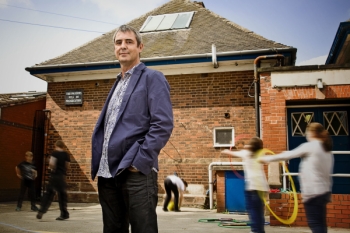
Boys Behaving Badly - Neil Morrissey: Care Home Kid


For many of us, childhood bring happy, comforting memories, which only really comes with the love of a family. For the rest, Neil Morrissey included, a childhood separated from family into a world of care involving, ‘aunts’ instead of mothers and ‘houses’ instead of a home, childhood becomes something that in adult life, becomes a painful repressed memory.
In this achingly honest look at the care system, Morrissey revisits his past, delving into how and why he and his brother were sent to separate children’s homes for, what he recalls, a petty act of theft.
Neil was sent to Penkhull children’s home in Stoke-on-Trent where he remained in the care system until 17. He was never reunited into the family unit. His beloved elder brother, Stephen, was also sent away but to a different home, Riverside, which has a dark history of sexual and physical abuse. Stephen passed away some years ago and never spoke of his time at Riverside, which only adds to Morrissey’s anguish over his brother’s potential experience.
Aside from the humbling insight into his confused and emotionally detached childhood, Morrissey also poses important questions about the care system in general; why are there 90,000 children in the UK currently living in care, and who is looking out for them? The answer, sadly, is not many people. A life in care for some involves severe abuse, neglect, emotional disembodiment and a strong sense of rejection.
Watching his eyes glisten and his voice choke as he reminisces about his late brother is utterly heartbreaking. To not only lose a close sibling, but also one who was ripped away at a time when they could have bonded all the more through puberty is unthinkable.
Morrissey’s quest to find with the people he grew up with in the home brings a bittersweet reunion.
“I do have black days,” mutters one of his ‘sisters’ from the care home whose lasting problems are evident.
The harrowing anecdotes of the two men who suffered abuse whilst at the same home at Neil’s brother were earth-shatteringly distressing. It’s almost impossible to watch without your jaw slowly dropping in horror and dismay.
Of all the people he met in this programme, not one seemed to have fully got over their experience as a Care Home Kid, and still battle with the same demons that stole their childhood in the first place. Morrissey’s guilt and anger that his experience wasn’t so bad in comparison, is a natural reaction for someone so empathic and again, the mystery of what happened to his brother reared its ugly head once more.
Despite his fight for retribution by meeting the social worker who rubber-stamped him and his brother’s demise into care, it transpires that although he thought he had a relatively normal childhood and was no more than a scallywag, it transpires that the authorities felt his parent’s were not doing enough to care for him and his brothers, and thought it best to place them into the care system, something which goes on regularly to this day.
Morrissey’s story certainly isn’t unique and the care system is something that desperately needs reviewing in this country, but with nationwide cuts and a constant demonising of youth today is it any wonder why so many young offenders in youth prisons have been through the care system?
As he so poignantly puts it; ‘there was a line in my report that said, “case closed”. But the case is never really closed.’
Words echoing the cries of many, Neil. 

Tuesday, 8 March 2011

How to Live With Women – more like How Not To Be A Person


“I’m a sexist pig,” chortles Terry, the charming young man embarking on BBC3’s latest attempt to turn around selfish, out-of-touch young people into functional human beings. This time it’s in the guise of transforming lazy young men with sexist and chauvinistic views on women by the way of making them spend some time working with ‘inspirational women’. So not so much a how-to guide as another point the finger and judge today’s youth, which we can’t seem to get enough of.
If you’ve given BBC3’s Working Girls a watch recently, you’ll be all too familiar with the concept as this is basically the same, but with the opposite sex. If you’re unfortunate enough to have watched the latest episode you’re sure to have been equally repulsed by the behaviour of Kaycie, and her and Terry are two are peas in a pod; sulky, arrogant, defiant and downright rude to everyone (or that’s what the programme depicts at least).
Oh and he wears makeup. Say no more.
The long-suffering fiancĂ©, Tanya, who’s barely more than a child herself AND is missing her right hand (which is never actually mentioned but it’s noticeable), has, at 18 years old, the life of a downtrodden housewife. She’s literally taking care of 2 young children, cooking and cleaning, all one handed. How can you not despair?
As this young man is put through his paces mucking out pigs, flying a plane and, err, being asked personal questions about why his looks are so important, the reasons for his backward attitude become apparent. He’s a vain, self-involved moron. Honestly, nothing more. The dimwit found it “shocking” to see a man cooking a meal. There’s nothing to crack here, just a quick personality readjustment which seems to take a few days and fills an hour-long slot on prime time telly.
During his time with a lifestyle journalist, they start to explore his need for makeup and excess grooming and he plays the ‘I was bullied in school’ card. Pardon my cynicism but childhood experiences are merely factors in adult personality traits, not direct influences.  Again to reference another similar programme format, Channel 4’s Beauty and the Beast also features such nonsense excuses for vanity. Its not, I’m afraid, get a grip and go out and experience what the real world is like.
Which is exactly what the premise of said programmes is but it consistently fails to work. What concerns me is the GENERAL attitude from many young people that they can think, do, say whatever they like without consequence. Even when production teams scourer the country searching for ‘opposite’ lifestyles for them to live alongside to demonstrate why the individual’s thinking is wrong, all too often their ‘views’ are too fixed and they can quickly lapse back into the lifestyle they had before.
Terry, on the other hand, did have his little revelation, so at least he DID learn something. Which is more than can be said for Kaycie on Working Girls, (honestly, it wasn’t even worth me writing a post about it, it infuriated me that much, but if you want to check it out, watch it here) 

Monday, 21 February 2011

Young, Jobless and Living at Home. Sound familiar??


Young people are 3 times more likely to be unemployed than adults. How’s that for a merry statistic? Well there’s plenty more to come as BBC3 have put together another documentary for and about young people, this time about the perils of a life of unemployment. Meet the ‘boomerang generation’, those who go off to uni and end up back at home for years as they cant afford to move out, and the rest, who just can’t find work full stop. Brace yourself.
Radio 1 stud Greg James is our presenter for the evening, a charming, approachable looking young man who schlepped up and down the country offering his sincerest sympathies to the unemployed young people he meets. He is a self -confessed ‘lucky one’, landing his job at Radio 1 immediately after graduating from university, and he’s all too aware that this is a rarity these days.
Throughout the programme we learn a few worrying statistics, like that as many as 1 in 5 16 to 24 year olds are unemployed and 2 in 5 people in their early 20s are living with their parents as they are unable to afford to move out. For the next hour Greg meets as cross section of desperate young folk, each pursuing very different paths to employment, and I despair. It’s so sad and so completely and utterly true, that if you’re under 25 and in decent employment, you’re darn lucky.
After a meeting with one of the unemployed younglings, Greg muses to the camera an analogy of education being like a conveyor belt, from primary school right the way up to university and then BAM! You’re on you own; you fall off the belt and don’t know what happens next. A feeling I’m sure many of you reading this will understand all too well.
The case studies picked for this couldn’t be more different, each with their naiveties and dreams waiting to be inevitably crushed. When we meet 18 year old Becca who gushes that in a year’s time she hopes to be pregnant, or already with a baby, living with her boyfriend in their own apartment paid for with his fantastic job (that he hasn’t got yet) you have to wonder what planet she’s living on. It takes her months and countless cv handing out and repeated applications to get her a part time job at Whetherspoons, which in the end she loves. Oh and they do get a flat AND have a baby. It is nice when things work out for people.
Less success stories for the other participants however, as only 1 of the 6-featured lands his ‘dream job’ in the music biz and that’s only after about a year of unpaid work and he even admits to being lucky as it can usually take 2 or 3. The most prominent point of the documentary I found was that not only is the quest for a job often a long and arduous one, but quite often for young people with actual skills, be it training in a specific field or a qualification, there aren’t enough jobs to fit that criteria, so people end up in the poorly paid, part time jobs, as there are always those about. 
This is a subject matter that is all too close to home for me. I am a graduate, but I am not unemployed and I don’t live with my parents. So whilst I’m not another statistic that would fit in with this documentary, alas I work part time in a bar, as I cannot find THAT job I want. But if this documentary preaches something we all know, its that persistence is the key.
Catch Young, Jobless and Living at home here